By Grace Hatchell.
Wondering what happens at the interval in a theatre show? Here’s a simple guide to what the interval is, how long it lasts, whether you can leave your seat, buy drinks, use the toilet, and what to expect during a theatre intermission in the UK.
If you’ve never been to the theatre before, the interval can sound a bit mysterious. Is it a break? Are you supposed to leave? Can you stay in your seat? Is it a mad dash for the loo while balancing a tiny tub of ice cream and trying not to lose your programme? The good news is that the interval is one of the easiest parts of the whole theatre experience once you know what to expect.
In simple terms, the interval is a short break in the performance. It usually happens roughly halfway through a show, although not every production has one. Some shorter shows run straight through without a pause, while longer musicals, plays, or family productions often include an interval to give everyone a chance to stretch their legs, use the toilets, grab a drink, and have a quick breather before the second half begins.
Now then, let me just pop my little tray round the auditorium and ask, “Ice cream, loves? Programme? Tiny bottle of wine if you’re feeling dramatic?” Only joking. Mostly. If I ever do start selling interval snacks, I’ll be the one causing a queue from Row A to the upper circle. But as your faithful theatre postwoman, I can at least deliver the facts straight from my satchel.
The interval usually lasts around 15 to 20 minutes, though this can vary depending on the venue and the production. In most theatres, there’ll be an announcement over the speakers or a message on screens telling you how long you’ve got. Sometimes it will be written in your programme too. If the interval is 20 minutes, do not treat that like a full afternoon in the park. It goes quicker than you think, especially if half the audience makes a run for the toilets at exactly the same moment.
When the lights come up and the cast leave the stage, that’s your sign that the interval has started. Some audience members get up straight away like they’ve been fired from a cannon. Others take a minute, have a stretch, check their phone, and decide whether they actually need anything. Both approaches are perfectly normal. You don’t have to leave your seat if you don’t want to. You can stay put, have a look through your programme, chat quietly to the person you’re with, or simply sit there and take it all in.
A lot of people use the interval to go to the toilet, and this is probably the number one reason the break exists for most audience members, whether they admit it or not. Theatre toilets can get busy very quickly, especially in older venues where there may not be many of them. If you know you’ll need to go, it’s often worth heading out promptly rather than waiting until you’ve finished discussing the first act in full dramatic detail.
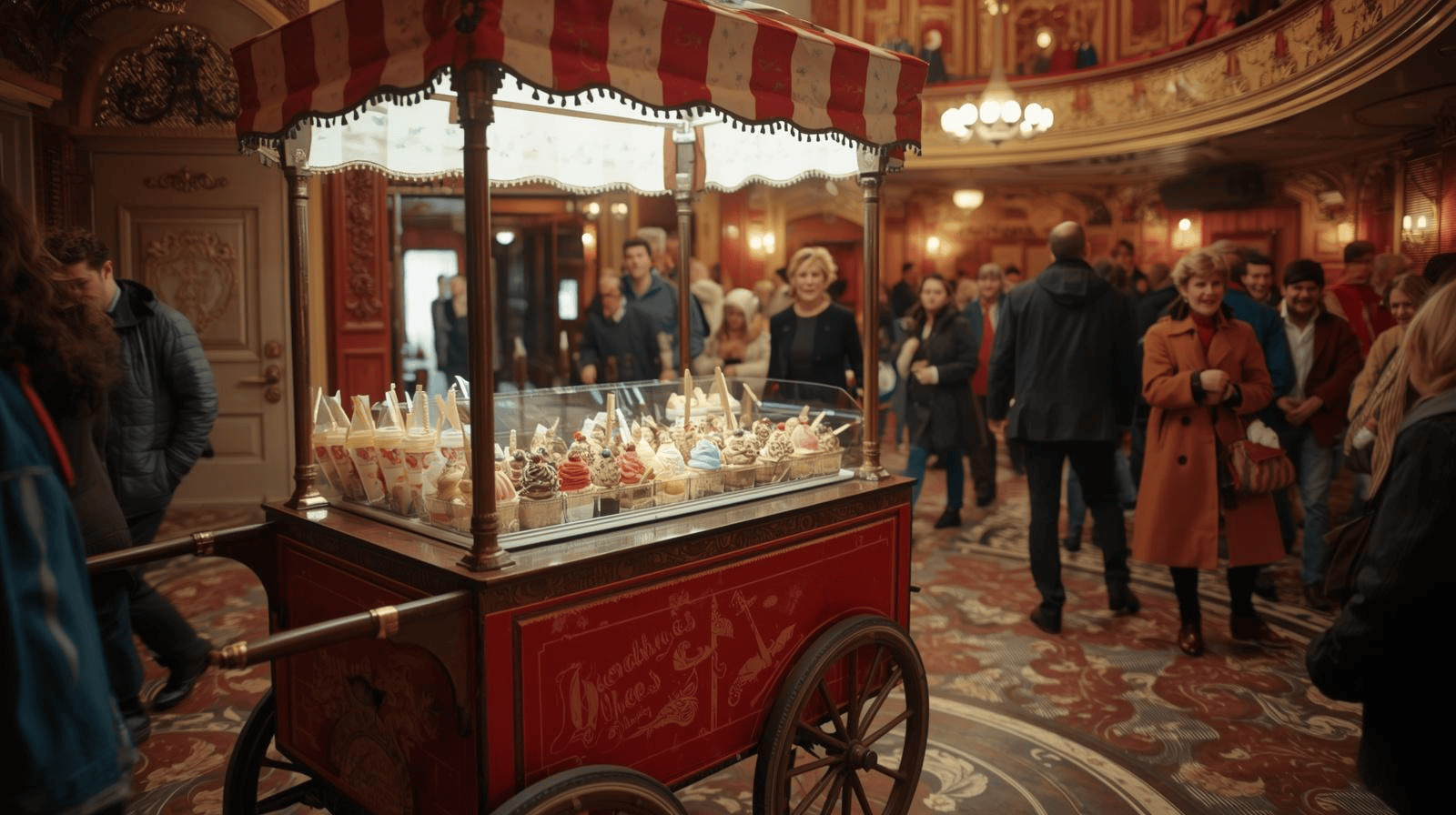
The bar is usually open during the interval too, selling drinks, snacks, sweets, and sometimes those classic little tubs of ice cream that have somehow remained part of British theatre life forever. In some theatres you can pre-order interval drinks before the show starts. This is actually quite handy, because it means your drink is waiting for you at the break rather than you having to stand in a long queue while glancing nervously at your watch. It’s a small luxury, but a very satisfying one.
If you brought a coat, bag, or shopping with you, you can leave it on your seat while you nip out, but use common sense. Most theatre audiences are there to enjoy the show rather than make off with somebody else’s scarf, but it’s still sensible to keep valuables like your phone, wallet, and keys with you. A theatre is magical, but not so magical that lost belongings simply reappear in the second act.
One thing first-time theatre-goers often worry about is whether they’re allowed to leave the auditorium. Yes, absolutely. That’s the whole point of the interval. You can go into the foyer, visit the bar, use the toilets, get some fresh air in designated areas if the venue allows it, or just have a wander around. Some theatres have lovely historic staircases, little exhibition areas, or beautiful bars that are worth a look. The interval can be part of the whole experience, not just a practical pause.
What you do need to keep an eye on is time. The second half will start fairly promptly, and there is usually a warning bell or announcement to let you know it’s time to head back in. Many theatres use a bell system, often with one bell to alert people and another to tell them to get back to their seats. If you hear the bell and you’re still deciding between a packet of Maltesers and a plastic cup of prosecco, it is time to make a choice, my love.
It’s a good idea to return to your seat as soon as you hear that call, because theatres generally want everyone back in place before the show resumes. If you’re late returning, you may not be allowed straight back to your seat. Instead, staff might ask you to wait until a suitable moment in the performance, especially if the production restarts in darkness or with an important quiet scene. That’s not to be awkward — it’s to avoid disturbing the cast and the rest of the audience.
If you are seated in the middle of a row, the interval is also the best time to get up if you know you might need extra room or want to avoid clambering past everyone once the lights go down again. It gives you a chance to reset, settle in, and be comfortable for the second half. Theatre seats aren’t always the roomiest things ever created, especially in older venues, so a quick stretch can do the world of good.
For families, the interval can be especially helpful. Children can have a little movement break, a drink, and a reset before the next part of the show. If you’re taking a child to the theatre for the first time, the interval often helps the evening feel less overwhelming. It breaks the experience into two manageable parts and gives you a chance to check how they’re getting on.
Some people use the interval to decide how they’re feeling about the show. You’ll hear all sorts in the foyer — “I’m loving it”, “I don’t understand a thing”, “that set’s incredible”, “he was definitely the murderer”, “I need another wine before Act Two”. That’s part of the fun. The theatre interval has its own little atmosphere: half gossip, half logistics, half people power-walking to the loo. Yes, that is three halves. Theatre maths.
It’s also worth knowing that not all intervals are the same. In a big West End musical, the foyer might be buzzing with queues, chatter, and staff moving quickly to serve everyone. In a smaller fringe venue, the interval may be much more relaxed, with just a few people milling around and maybe a compact bar in the corner. At an outdoor or immersive event, the break might work differently again. But the basic idea stays the same: it’s a pause for the audience before the performance continues.
If a show does not have an interval, theatres usually make that clear beforehand, either on the booking page, on tickets, or in signs around the venue. This is handy to know in advance, especially if you want to use the toilet before the performance starts or buy a drink ahead of time. A two-hour show with no interval is perfectly normal, but it does mean you’ll want to be prepared before the curtain goes up.
So, what happens at the interval? In truth, nothing too frightening. The show pauses, the audience shuffles out, the bars get busy, the toilets get busier, and everyone reassembles a few minutes later ready for Act Two. It’s not a test. You don’t need to know secret rules or perform some grand ritual involving binoculars and a gin and tonic. You just take a breather, enjoy the atmosphere, and come back in time for the rest of the story.
And if you do spot me wandering about with an imaginary tray of choc ices tucked under one arm and theatre gossip under the other, just know I’m there in spirit, keeping the whole thing moving along nicely.
At the theatre, the interval is simply your little pause between worlds. One half of the story behind you, one half still waiting in the wings. Lovely, really.
About the Author
