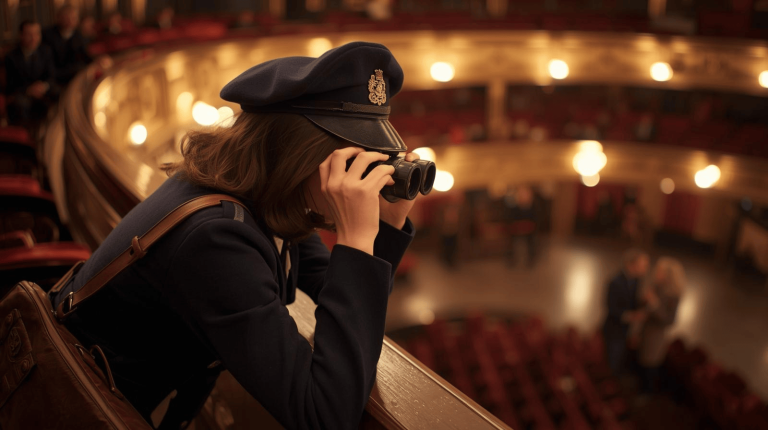
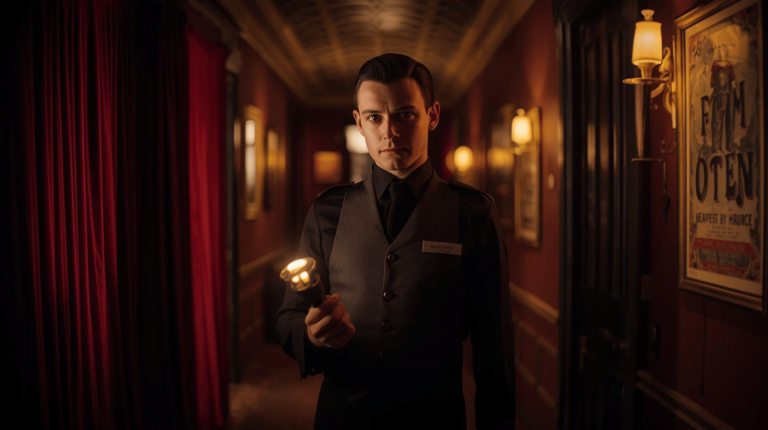
People think ushers just show you to your seat.
I used to think that too.
You arrive late, slightly flustered, clutching a programme you bought while pretending you understood the seating plan. Then, like theatre magic, a person appears with a torch, smiles kindly, and guides you to Row G Seat 14 without a single sigh, even though you’ve stepped on three coats and apologised to a stranger’s knee.
But here’s the serious bit first.
Ushers are the quiet machinery that keeps theatre working.
They are the first hello and the last goodbye. They calm nervous first-time audiences, help someone find the accessible entrance, locate lost glasses, manage fire safety, handle emergencies, soothe crying children, deal with the “I think I’m in the wrong theatre” situations, and somehow still know exactly when the interval ice creams will run out.
They watch the show dozens of times but never spoil it.
They notice when an audience member looks unwell before anyone else does.
They know which seats have tricky sightlines.
They know which productions will get standing ovations on opening night.
A good usher doesn’t just seat you. They protect the experience.
Without them, theatre would collapse into polite chaos.
Now.
This is where I probably shouldn’t continue.
Because after enough evenings delivering post between venues, you start to notice something. Ushers recognise each other instantly. Different theatre, different city, same nod. No introduction needed. Just a look and a small smile that says, “Ah. One of us.”
Which brings me to the Code.
Officially, it does not exist.
Unofficially… every usher knows it.
I am not allowed to print the full text (I have tried, and a very polite person in a blazer appeared beside me before I finished my tea), but I can reveal some of its articles.
Article I: The Latecomer Principle
Latecomers must be seated with kindness and without judgement, even when they arrive during the quietest monologue in the play.
Article II: The Torch Oath
The usher’s torch shall never shine directly into the eyes of an audience member, no matter how confusing Row H becomes in the dark.
Article III: The Programme Doctrine
If a patron asks “Is this a good seat?” the answer is always “It’s a lovely view from here.”
Article IV: The Ice Cream Clause
No usher may reveal which interval snacks sell out first, even under gentle questioning.
Article V: The Applause Watch
An usher must always know when a standing ovation is coming approximately three seconds before it happens.
There are, I am told, additional sections involving forgotten umbrellas, mysterious seat-switchers, and the ancient art of opening auditorium doors silently during Act Two.
And then there is the final line, the one every usher signs:
The show belongs to the audience, but the audience belongs to the moment, and we guard the moment.
I once asked an usher if the Code was real.
They smiled, adjusted their badge, and said, “We just like theatre.”
Which, of course, is exactly what someone bound by a centuries-old theatrical agreement would say.
So next time you enter a theatre and someone guides you safely through the dark, remember:
They’re not just finding your seat.
They’re keeping you and the story safe.
Love,
Grace
(Occasionally recognised by ushers. I still don’t know how.)
About the Author