What Happens When Theatre Becomes Democracy?
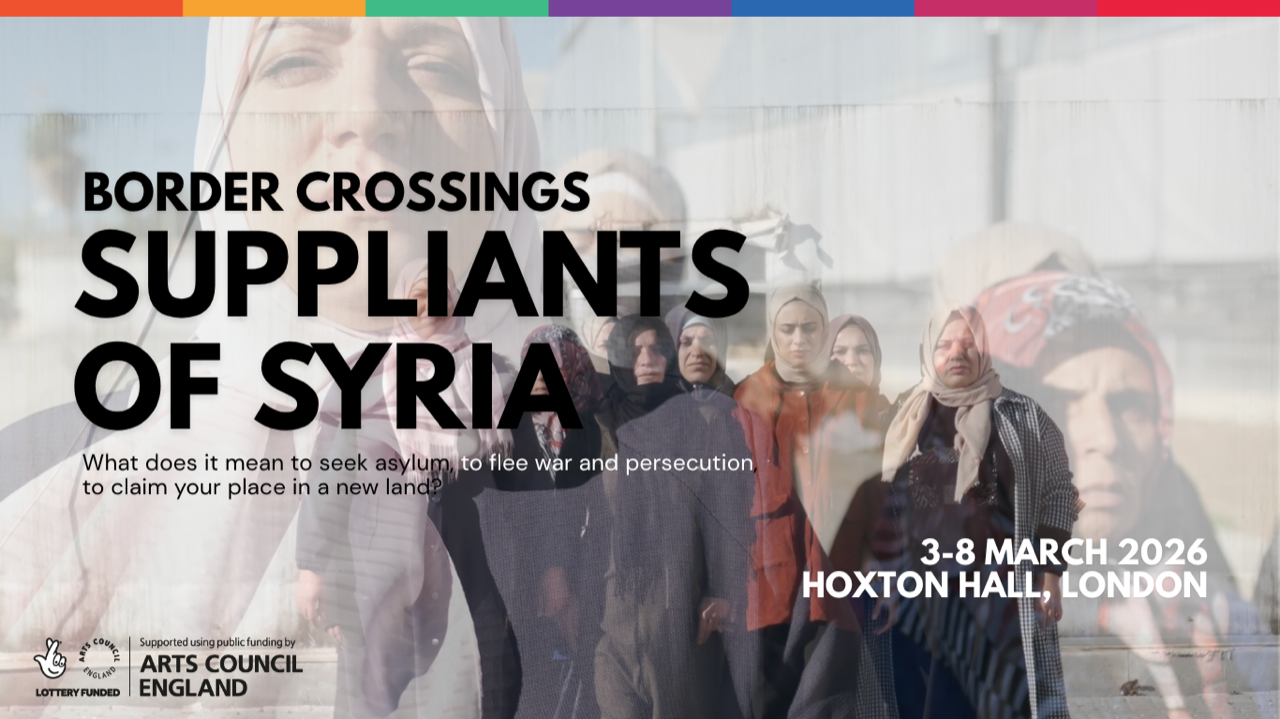
SUPPLIANTS OF SYRIA brings ancient Greek tragedy and modern refugee voices to Hoxton Hall
There are shows you watch.
And then there are shows that look straight back at you and ask, well then — what are you going to do about it?
SUPPLIANTS OF SYRIA is very much the latter.
Landing at Hoxton Hall this March, Border Crossings’ urgent new multimedia production takes one of the oldest plays in the Western canon — Aeschylus’ Suppliants — and cracks it wide open, allowing the real, contemporary voices of Syrian women to speak through it. Not metaphorically. Not symbolically. Literally.
On screen, Syrian women tell their stories. On stage, European performers respond. Around them, the walls themselves are lined with artwork by local refugees. And at the heart of it all? A live debate, asking audiences to grapple — not passively, but actively — with the question of refuge, responsibility, and what democracy actually means when human lives are on the line.
Greek tragedy, after all, was never meant to be polite.
Written in 463 BC, Suppliants tells the story of women fleeing their homeland in search of safety — asylum seekers by another name. Two and a half thousand years later, Border Crossings travelled to Turkey to develop a contemporary version of the play in direct dialogue with Syrian women who have lived that flight themselves. These women shared their testimonies, performed the original choruses, and helped reshape the work from the inside out.
The result is a piece of theatre that refuses easy narratives.
SUPPLIANTS OF SYRIA confronts the yawning gap between how refugees are talked about — in headlines, soundbites, and online comment sections — and the brutal reality of what displacement actually looks like day to day. By placing filmed testimonies into live conversation with actors, the production doesn’t “represent” refugee voices. It centres them.
And crucially, it doesn’t let the audience off the hook.
Using the ancient Greek model of theatre as democracy, every performance becomes a civic space. Audiences don’t just listen; they participate. Each show is preceded by a short talk from a refugee or NGO worker, followed by music and dance from local refugee communities. There are even pre-show dinners designed to bring refugees and young people face-to-face with civic dignitaries, journalists, health workers, and politicians — not across podiums, but across tables.
Art as meeting place. Theatre as action.
Artistic Director Michael Walling puts it plainly:
“There is a crisis — but it’s to do with the reception of refugees, not the people themselves. In our public debates, the one voice that is never heard is that of the refugee.”
That silence is what SUPPLIANTS OF SYRIA sets out to break.
Developed in partnership with refugee charity Meryem Kadın Kooperatifi and Çukurova University’s Film Department, the production also works with Turkish creatives including video artist Kıvanç Türkgeldі and producer Ilke Sanlier, ensuring voices that cannot physically travel to London are still fully present in the room. Solidarity tickets further commit to the idea that this conversation belongs to those with lived experience — not just those with opinions.
This is theatre that remembers its roots.
Not escapism. Not spectacle for spectacle’s sake. But a communal space where stories matter, voices are heard, and democracy is rehearsed — live, messy, and unresolved.
And honestly? In a time when words like “refugee”, “asylum seeker” and “migrant” are too often weaponised, a show like this feels less like an artistic choice and more like a moral one.
If theatre still has the power to change how we see each other — and I firmly believe it does — then SUPPLIANTS OF SYRIA is exactly where that power lives.
Grace’s satchel is heavy with history on this one — and rightly so.
https://hoxtonhall.ticketsolve.com/ticketbooth/shows/1173671430
About the Author