By Grace Hatchell, currently trying to explain to confused bloke in Greggs that “just popping to a fringe festival” does not automatically involve glitter in places you’ll regret later.
There’s something rather lovely about a Fringe festival turning ten years old.
Mostly because it means somebody, somewhere, survived an entire decade of spreadsheets, late-night tech disasters, performers asking where dressing rooms are located, and at least one comedian definitely crying behind a folding chair after selling three tickets.
And honestly? That deserves applause on its own.
Now celebrating its tenth anniversary, Watford Fringe Festival is returning this July with a huge month-long programme packed with theatre, comedy, dance, music, family entertainment and more than seventy live performances across the town.
Aye, seventy.
That’s not a fringe anymore. That’s basically organised chaos with lanyards.
Running from 1 July to 31 July 2026, the festival has quietly grown from a local creative initiative into one of the UK’s increasingly respected regional Fringe events, bringing together award-winning acts, emerging artists and community performers across multiple venues in Watford.
And there’s something quite refreshing about its approach too. Not every Fringe festival needs to spend half its time desperately trying to become “the next Edinburgh.” Sometimes there’s real magic in a festival simply building its own identity instead.
Mind, Grace does enjoy the idea of Watford suddenly transforming into a giant performance playground for a month. One minute you’re nipping out for toothpaste, next minute there’s flamenco dancers, cabaret singers and a self-proclaimed dictator doing crowd work around the corner.
That’s Fringe, duck. Blink and somebody’s doing experimental Shakespeare in a church hall beside a bloke dressed as Elvis.
This year’s line-up includes comedy shows such as Mitch Benn: Asking Elvis, Jody Kamali: This Is My Dad and Crowd Work with President Obonjo, alongside musical performances, theatre productions and even the Wrestling World Cup, which honestly sounds like somebody threw Eurovision and WWE into blender after two pints.
Music fans can also catch Alison Wheeler — former vocalist with The Beautiful South — performing Southern Beauty, while local musical theatre company In Good Company will present Heart & Music featuring West End performer Ashleigh Fleming from Phantom of the Opera.
And that’s the thing with festivals like this. They become less about one giant headline act and more about atmosphere. Discovery. Stumbling into something unexpected because poster looked interesting and you fancied avoiding rain for an hour.
Some of the best Fringe experiences happen entirely by accident.
Watford Fringe Festival was first launched back in 2016 to champion local creative talent and has continued growing year after year — even adapting online during the pandemic. Over time it’s become a proper part of Watford’s cultural calendar, with venues across town joining in, including Watford Palace Theatre, Watford Colosseum and Watford Pump House.
What also gives Watford Fringe its charm is that this doesn’t feel like a festival parachuted into town for few Instagram photos before disappearing again. It feels properly rooted in community. Organised by Watford Pump House alongside Watford Borough Council and supported by local partners, the Fringe spreads right across the town each summer, with venues including Watford Colosseum, Watford Palace Theatre, West Herts College, local churches and community spaces all joining in.
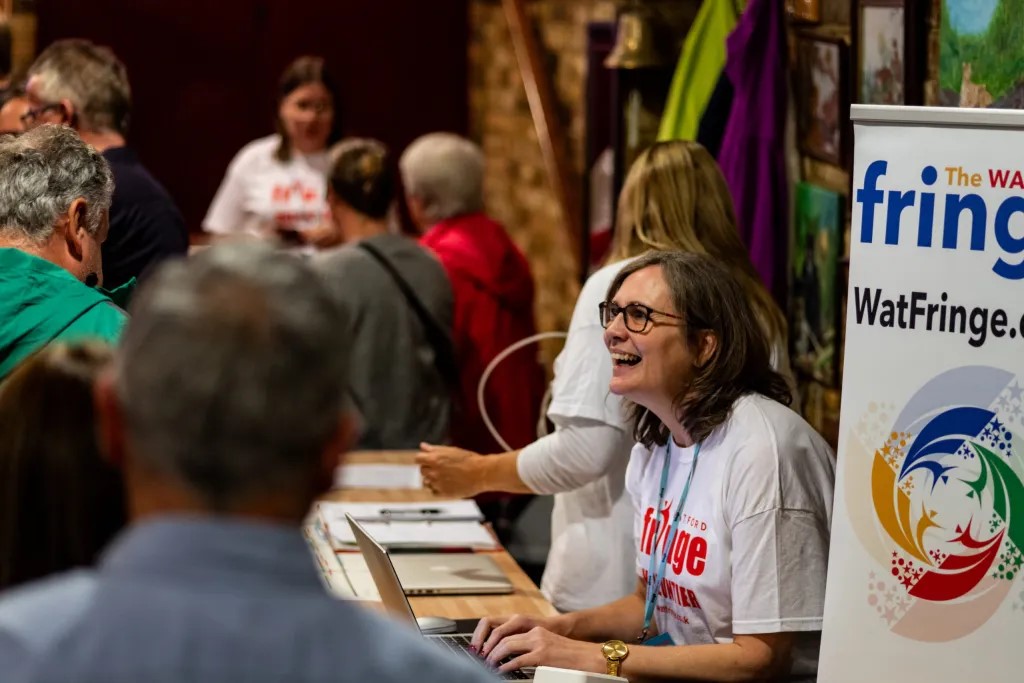
And honestly, Grace has soft spot for festivals like this because they survive on something more powerful than flashy marketing budgets — volunteers. The arts world quietly runs on cheerful people wearing lanyards, pointing audience members towards toilets and pretending they definitely know where Studio Space B is. Every year dozens of volunteers help welcome audiences and support performances across the festival, helping create the warm, community atmosphere that’s become part of the Watford Fringe identity.
There’s also something very northern about Grace admiring a festival that clearly runs on community spirit and volunteers. Fringe festivals aren’t built by glamour. They’re built by exhausted people carrying folding tables at 8am while surviving entirely on caffeine, panic and blind optimism.
Frankly, the arts would collapse within forty-eight hours without women in sensible shoes holding clipboards.
Chair of Watford Pump House Lee Farman said the organisers are excited by both the range and quality of this year’s programme and warned that several events are likely to sell out quickly.
And honestly? He’s probably right.
Because after ten years, Watford Fringe doesn’t sound like a festival still trying to prove itself anymore.
It sounds like one that already knows exactly what it is.
About the Author