By Grace Hatchell
Some Edinburgh Fringe pitches arrive wearing sensible shoes and carrying a tidy synopsis.
Then there is DUSK/NIGHT/DAWN, which seems to have swung through my window upside down, trailing smoke, neon and the unmistakable atmosphere of somebody who has not seen a conventional bedtime in years.
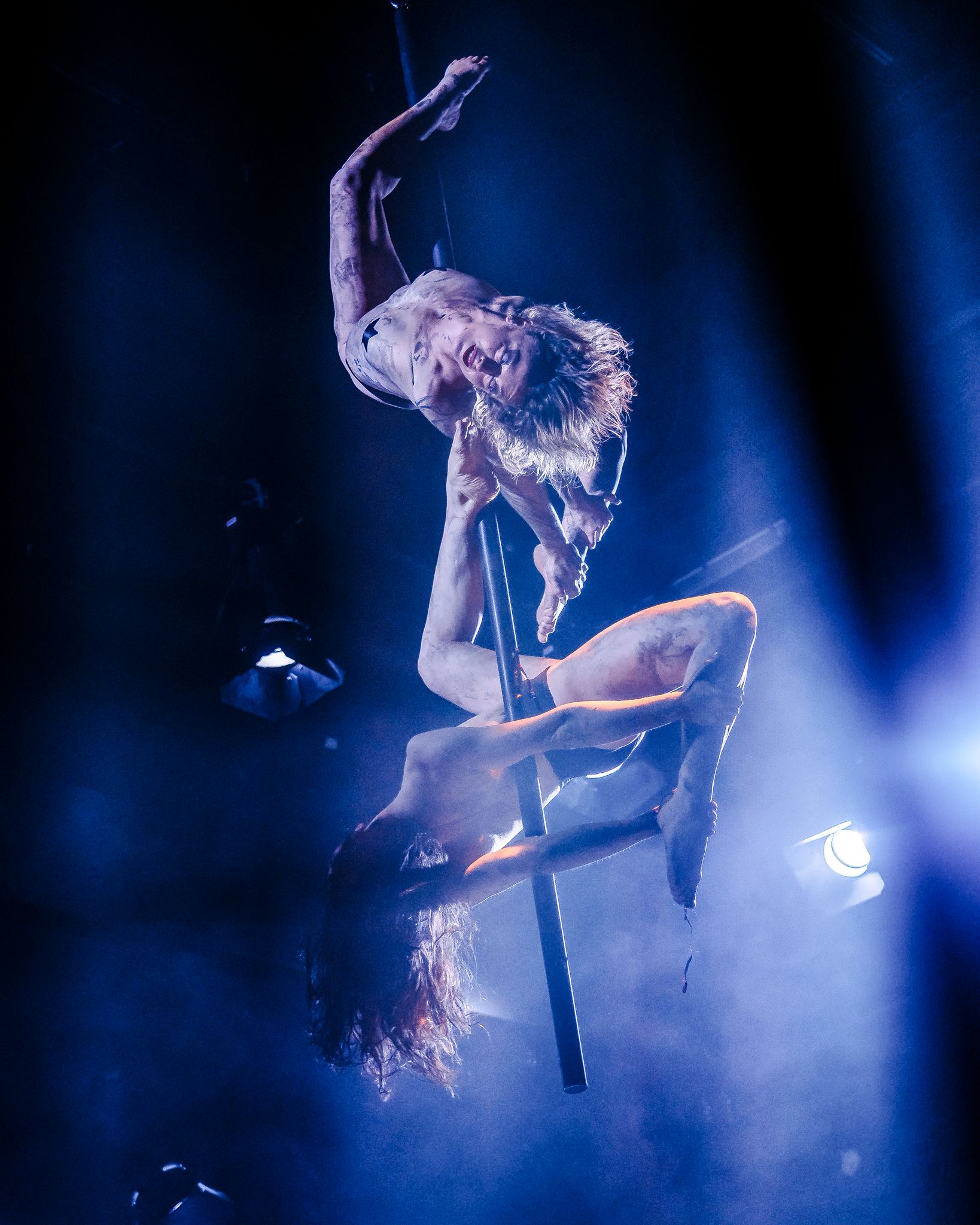
Presented by Vertical Dreamscape, this experimental aerial pole dance production follows a pole dancer through a night at work, as her craft and identity dissolve into a series of cinematic, sensual and increasingly surreal dream worlds.
The company describes the show as raw, textured and vibrant.
In practical terms, I believe this means extraordinarily talented people will be doing things several feet above the ground while I sit below them, clutching my programme and experiencing a pulled muscle entirely through sympathy.
Nightlife without the polished filter
Behind the spectacle is a subject that deserves more than a raised eyebrow and a cheeky poster.
Nightlife work is often presented from the outside. Depending on who is telling the story, it is glamorous, dangerous, seedy, empowering, exploitative or all five before the interval.
DUSK/NIGHT/DAWN instead places the worker at the centre of the experience.
That is what catches my attention.
The show appears to ask what happens when performance, labour and identity begin to bleed into one another. Where does the artist end and the person begin? What happens when the body is both a performer’s instrument and the thing being watched, judged and consumed?
It is a complicated relationship. Most of us have had jobs where we have needed to perform enthusiasm while internally wondering whether hiding beneath the desk would count as annual leave. Here, however, that performance becomes physical, public and potentially suspended several feet in the air.
The production promises darkness and sensuality, but also exhaustion, discipline and transformation.
This does not sound like nightlife used as decoration because somebody found a red lightbulb, a feather boa and a smoke machine in the props cupboard.
The artists are drawing on their experience of pole, aerial performance and nightlife spaces to create something that feels less like a conventional story and more like being pulled into the emotional current of a working night.
The press material describes a high-octane, durational work that pushes its performers physically and mentally, creating something visceral, unpredictable and almost alien.
I tend to become mentally exhausted when a theatre seat has insufficient legroom, so I shall try not to compare our respective hardships.
In other words, this probably is not the evening for anyone who likes theatre to begin in a drawing room, including disputed inheritances and conclude with somebody announcing an engagement.
Unless the engagement is to an aerial pole. In which case, all bets are off.
The artists in the air
Donna Carnow is a US National Pole Art champion and aerial pole artist, while Gina Alm is both a visual artist and a pole and aerial performer.
They have worked together since 2021, touring their creative work through circus festivals, black-box theatres and nightlife spaces across several continents.
That combination of visual art and formidable physical technique matters.
Pole performance is still too often discussed as though athleticism, eroticism and serious artistic intention cannot exist on the same stage without one of them being asked to wait outside.
I suspect DUSK/NIGHT/DAWN has no intention of choosing between them.
Nor should it.
The body can be powerful, sensual, exhausted, disciplined and vulnerable at the same time. Human beings are inconveniently complicated like that. We rarely fit into one tasteful little category, despite the best efforts of theatre brochures and online booking menus.
The production is directed by Andy Bewley, formerly Associate Director at Giffords Circus, with original music by musician and audio engineer John Challis.
That creative combination suggests the show is aiming for something more immersive than a straightforward display of technical ability.
I am expecting movement, music, lighting and imagery to work together until I am no longer entirely certain whether I am inside a theatre, a nightclub or somebody else’s particularly athletic fever dream.
At 9.30pm in Edinburgh, any of those options feels possible.
This is not “just” pole dancing
There remains a strange habit of treating pole as something that must defend its artistic credentials before anybody is prepared to take it seriously.
I find that rather tiresome.
Nobody watches a ballet dancer launch themselves across a stage and mutters, “Yes, but is it really physical theatre?”
Nobody sees a circus artist suspended above an audience and asks whether they have considered doing something more respectable with a filing cabinet.
Yet pole performers are still expected to prove both their athletic ability and artistic intention before the conversation can properly begin.
DUSK/NIGHT/DAWN appears determined to remove that false distinction.
The show has already received the Jury Choice Award and Audience Choice Award at FinFringe 2025, as well as an Outstanding Choreography Award at Reykjavík Fringe in 2024.
Those awards suggest audiences and juries have responded not only to the physical daring of the production, but also to the way it has been shaped and presented.
Quite right too.
Hanging upside down is impressive.
Hanging upside down while communicating something meaningful about labour, identity and survival is considerably more interesting.
I once became dizzy putting on a fitted sheet, so I shall not be issuing technical notes.
A night shift transformed into art
The central idea of following a pole dancer through one night at work gives the production a clear emotional spine.
Night shifts have their own atmosphere.
Time becomes strange. The outside world grows quiet while the people working inside bars, clubs, theatres and venues continue moving through a completely different rhythm.
By placing that experience inside a dreamlike physical production, DUSK/NIGHT/DAWN seems interested in more than the events of one evening.
It asks what the work leaves behind: in the muscles, in the mind and in the version of yourself that emerges when morning finally arrives.
I am especially curious about the title.
Dusk suggests anticipation.
Night suggests immersion.
Dawn suggests survival, release or simply the moment when the lights come up and everyone has to pretend they are ordinary again.
There is something rather exposing about daylight after a long night. Glitter becomes visible in places where glitter has no legitimate business being, eyeliner begins making independent decisions and every life choice since midnight suddenly requests a formal review.
That journey offers plenty of space for beauty, danger, humour and discomfort.
I would be disappointed if the show made things too neat. Nightlife rarely is. Neither, for that matter, is the Edinburgh Fringe.
My take on it
This sounds visually spectacular, physically astonishing and thematically rich.
It also sounds like the kind of production that could become overly abstract if the imagery overwhelms the human story beneath it.
I want the pole dancer at the centre of the show to remain a person, not merely a symbol floating attractively through red lighting.
I want to feel the work behind the spectacle: the repetition, the bruises, the concentration, the performance of confidence and the strange split between being watched publicly and remaining emotionally private.
I want the production to show me the woman as well as the image.
Most of all, I want it to trust its own subject.
It does not need to apologise for sensuality, soften the realities of nightlife or explain pole performance as though the audience has accidentally wandered in while searching for The Importance of Being Earnest.
Give me the darkness.
Give me the glamour.
Give me the exhaustion, the sweat and that peculiar moment at dawn when the night has ended but has not quite left the body.
Give me something beautiful, but do not polish away the bruises.
And please give me a sturdy chair.
I shall be performing all of my aerial work from the seated position, possibly with a drink and a concerned expression.
DUSK/NIGHT/DAWN at Edinburgh Fringe 2026
DUSK/NIGHT/DAWN is presented by Vertical Dreamscape at Assembly Roxy, Central.
The production runs from 5 to 30 August 2026 at 9.30pm, with a running time of 60 minutes. Tickets are available from £9.
DUSK/NIGHT/DAWN | Edinburgh Festival Fringe
About the Author