Screenshot
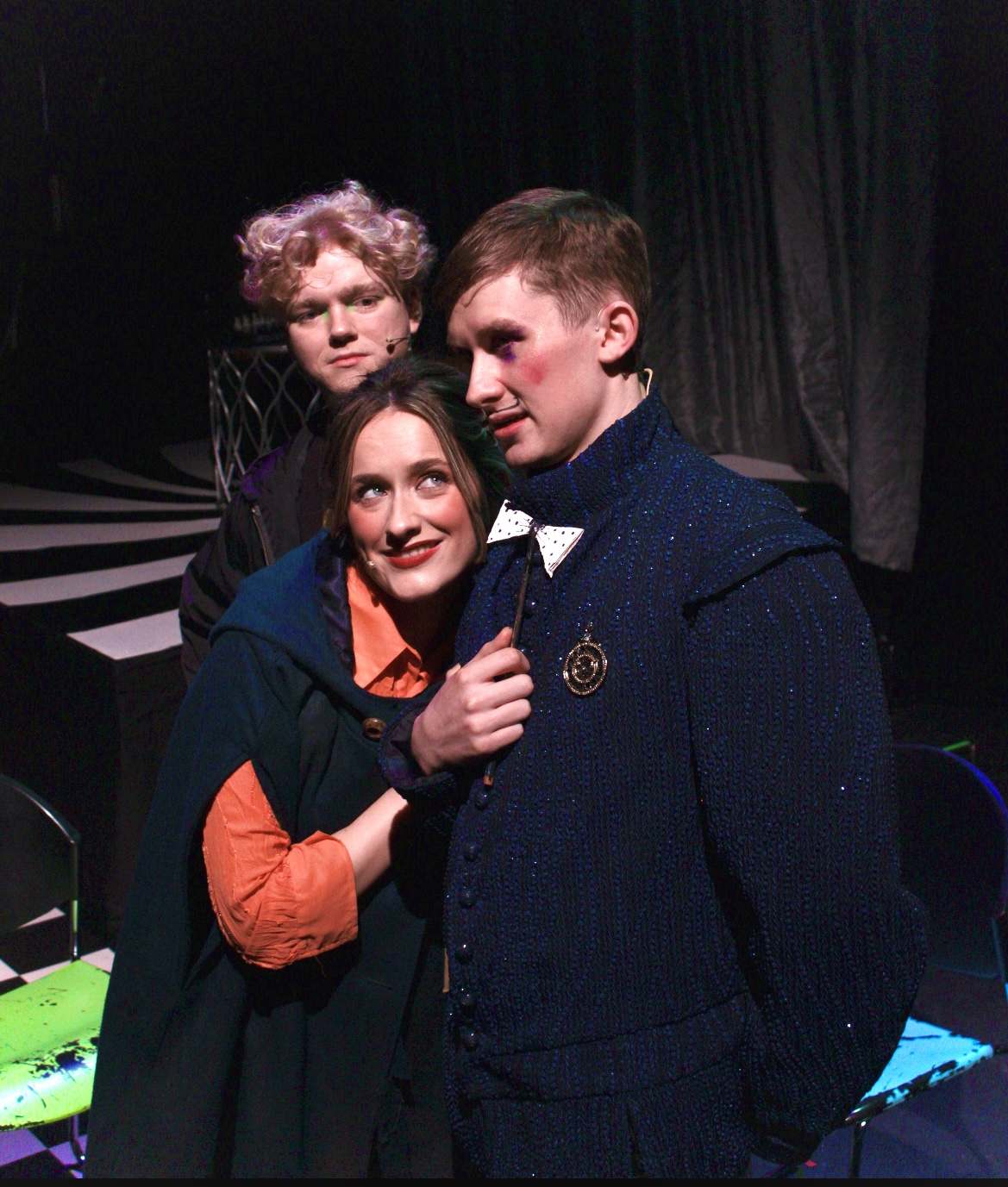
Theatre Village were lucky enough to catch up with the creative team behind Ghosted! A New Musical at this year’s Edinburgh fringe. It also features in our top ten shows to see at the Fringe.
Makena Margolin— Director & Lyricist of Ghosted! A New Musical; Co-Founder of Helianthus
Productions
Hayden Kline— Composer of Ghosted! A New Musical
Sonja Dighe— Producer of Ghosted! A New Musical; Co-Founder of Helianthus Productions
Ghosted! A New Musical | Edinburgh Festival Fringe
What inspired the creation of Ghosted!? Was it grief, ghosts, or a guilty
obsession with Beetlejuice?
Makena: Hayden and I knew from March 2024 we wanted to write a musical after we
met working on a production of “Carrie: The Musical” at Trinity College Dublin. It just so
happened that for my final year capstone, we had the perfect opportunity to create a
show that would seek to blend the musical and horror genres, which lead to the first
original musical ever produced in the Drama and Theatre Studies department. The idea
of ‘ghosts’ came about after I saw Marina Carr’s new production ‘Audrey Or Sorrow’ at
the Abbey, the National Theatre of Ireland. As we were developing our show, playing
with different settings and characters, the once far-away motif of ghosts became my
reality: I lost one of my best friends in May, and just a few weeks later, I lost my
grandfather.
The show blends humour, horror, and heart — was it challenging to strike that
tonal balance?
Makena: That was something we were really conscious of when we were writing the
music; making sure that if we were going to write in a pun, a darker joke, or even an
emotional reveal, it had to serve the greater purpose of the show. I do feel like the
minute we had our cast and went into rehearsals, their energy and willingness to play
and be vulnerable made finding that balance quite easy. As balancing my roles as
director and as lyricist, I made sure that we all came into the project, cast and crew, with
a strong reason ‘why’ for doing this show. Mine was simple: everyone has ghosts, and
how beautiful it is to show that as a universal experience.
How did you go about crafting original songs that deal with topics like death and
grief without being, well…dead boring?
Makena: Honestly, not taking it too seriously. Which sounds terrible, but most of my
grieving process was finding the comedy and joy in an otherwise dark time. Ghosted!
was such an emotional retreat for me, and I think part of the reason why is because we
never approached the show as a drama. It deals with really difficult topics for sure, but
it’s in the form of a campy musical. It was so gratifying and beautiful to hear audience
members laughing, and then others crying. I remember so vividly that one of my actor’s
aunts came up to me after our final show was crying and she held my hands while she
shared her own grief of losing her mother. That, as a creator, solidified my belief in the
unique power of this show. Anyone will have a wonderful, campy, hilarious time, but if
you need an extra dose of love, we’ve the tissues and hugs to go along with it too. And
our ticket prices are a cheaper alternative to therapy:)
Hayden: Surprisingly, it’s easier than expected to keep songs about death and grief from
becoming too sad. Imagine wearing a hat, and then putting on another hat.
Preposterous, right? With lyrics as morose and morbid as those in Ghosted!, the
musical identity was free to be as upbeat and fun as possible. In fact, leaning into that
dissonance adds to the show’s identity, keeping it macabre and fun.
Has performing in Ghosted! changed how you think about grief or the afterlife?
Makena: I think so! While writing the show, I did a lot of research on the cultural
significance of ghosts and how those supernatural entities are utilized in western drama.
I learned from Marvin Carlson to view ‘theatre as a storehouse of emotion.’ As energy
never dies, only changes form, every performance venue has the ergetic imprint of the
shows that came before and the show’s that’ll come after. Theatre is an inherently
haunted artform in that respect…and it’s a good, and I’d argue even wonderful, type of
haunting. I have found since penning the first lyric of Ghosted! a very comforting feeling
in the belief that my people who are no longer are still ‘haunting’ me. I see my beautiful
friend Karis in every sunflower, and my grandfather in classic 50s tunes. It’s my way of
remembering them and their way of reminding me their love never died…only changed
in its expression.
How do you keep the energy up for a show that’s equal parts spooky and
showtune-y?
Makena: Our cast had a major part in our creation process, as our musical script was
fully devised over a 4-week period for our first run. So besides our 14 original songs and
our basic plot points, everything else was created WITH our cast. They had a lot of
freedom to explore these characters and are granted the opportunity to explore new
choices every time we’re in the rehearsal room. We encourage a dynamic playing
space. But also, in our re-development of the musical, we’ve approached everything as
if it is brand new show (and about 45% is new). The same elements of whimsy,
metatheatrically, and death, are still at the heart of the piece, just fine tuned and turned
up a few notches.
Hayden: An energetic script and cast are the best bets for keeping the energy up over
seventy minutes. Musically, the two main ways we tried to match that was through
building and subversion. Ears grow bored easily. Too much repetition or stagnation
leaves the listener unamused. The music, then, must always be moving. Building
towards a climax by introducing additional elements raises the stakes; conversely,
subverting anticipations keeps the audience guessing. Those two guides made trimming
the fat from these songs easy, and hopefully it maintains its entertainment from the first
note to the last.
How did you approach writing music for the supernatural? Were there specific
instruments, motifs, or styles you turned to?
Makena: I always associated Edgar with a vaudeville-esc type persona so playing with
that classic American musical theatre sound, felt right. That hint of jazz with a walking
bass, it’s the perfect Edgar tone. Mia as she is a newly minted ghost tends to flip
between contemporary and Edgar’s classical musical theatre. I find that she melodically
tends to copy whatever style the other character(s) are singing, rather than finding her
own which serves to show how, as a ghost, she’s stuck. The ‘human’ characters tend to
follow a more modern/contemporary sound showing their newer age in comparison to
the dated ghosts.
Hayden: Of course, with a relatively small stage and ensemble, instrumentation is
limited. But with limits comes inspiration. Broken down into just piano, bass, and
auxiliary percussion, the music is able to morph into a number of different styles and
genres. Throughout history, the concept of death and the afterlife has manifested in a
number of ways, and through crafting the particular mythology of the show, we were
able to concoct a musical throughline that both allows the show to have fun and poke at
the absurdities of death, while still holding reverence for the deceased. Much of that is
showcased through elements as simple as the progressions; sharp-eared listeners will
be able to discern supernatural themes through something as simple as sequential
chord structures.
What’s the most unexpected musical number in the show, and what makes it so
special?
Makena: either “Ghosting 101” (which has about 5 versions before we landed on the
final one) or “The Banishment!” (which is actually a brand new song for this new run).
It’s a very intricate balance of song and text that’s weaved together, and ends with a
cheeky quodlibet, where all four actors are singing familiar melodies/musical motifs at
the SAME time. It’s awesome. It was a bit stressful to write as we really wanted it to be
a pure Quod, but now that it’s done, I’m so excited for audiences to see hear it! I mean,
how often do you get to see a ghostly banishment on stage.
Hayden: Much of the musical language used in the show is reminiscent of quasi-folksy
Americana throughout the 20th century, from big band Broadway-inspired numbers to
Mississippi Delta-style blues and jazz to more contemporary singer-songwriter pieces.
With that in mind, some of the most unexpected and special pieces are these haunting
songs that work with Edgar Allen Poe’s poetry and our talented cast’s beautiful vocal
harmonies to ground the show in the deep dark macabre of gothic folk. The first,
Nevermore, (which uses the words from Edgar Allen Poe’s “The Raven”), is used to
open the show, and then the theme pops up again when necessary, reminding the
audience – “only this and nothing more.”
Any songs that were too spooky — or too silly — that didn’t make the final cut?
Makena: The very first song I wrote for Ghosted! was what was supposed to be Henry’s
big ‘I want’ song that comes early on in the show. But unfortunately, “ball” and “yard” do
not rhyme so that song will forever live in the depths of my notes app. And I think “The
Otherside” makes a mighty fine replacement that lovers of Green Day and MCR will die
for.
Hayden: Though there are very few songs that have been outright cut, there are quite a
number of songs that required so much attention that they ultimately became entirely
different beasts than what they began as. For example, we kept finding issues with
Ghosting 101 and (what is now) The Banishment – either the tone was too serious, or
the melody wasn’t quite as interesting, or the song kept meandering, or there wasn’t
much for the actors to do – and so they required massive overhauls. Each piece
required at least a few tweaks or refinements, but some of those ships left us feeling like
Theseus. How much does a song need to change before it’s a new song?
Ghosted! A New Musical | Edinburgh Festival Fringe
About the Author


Can’t wait to hear / see the revamped version of this show at Fringe! Saw it at Trinity, and was blown away. Funny, thought-provoking, touching, and clever as all hell. Audiences are in for a treat no doubt!